Microsoft Surface Products, including Surface Pro, Surface Laptop, Surface Go, and Surface Studio, are widely used in enterprise, educational institutions, and government organizations, due to their portability and performance. When a Microsoft Surface device is repurposed, reassigned, returned after a lease, or sold/retired/disposed of, it becomes crucial to permanently erase all stored data to prevent unauthorized access and ensure compliance with data privacy and security regulations.
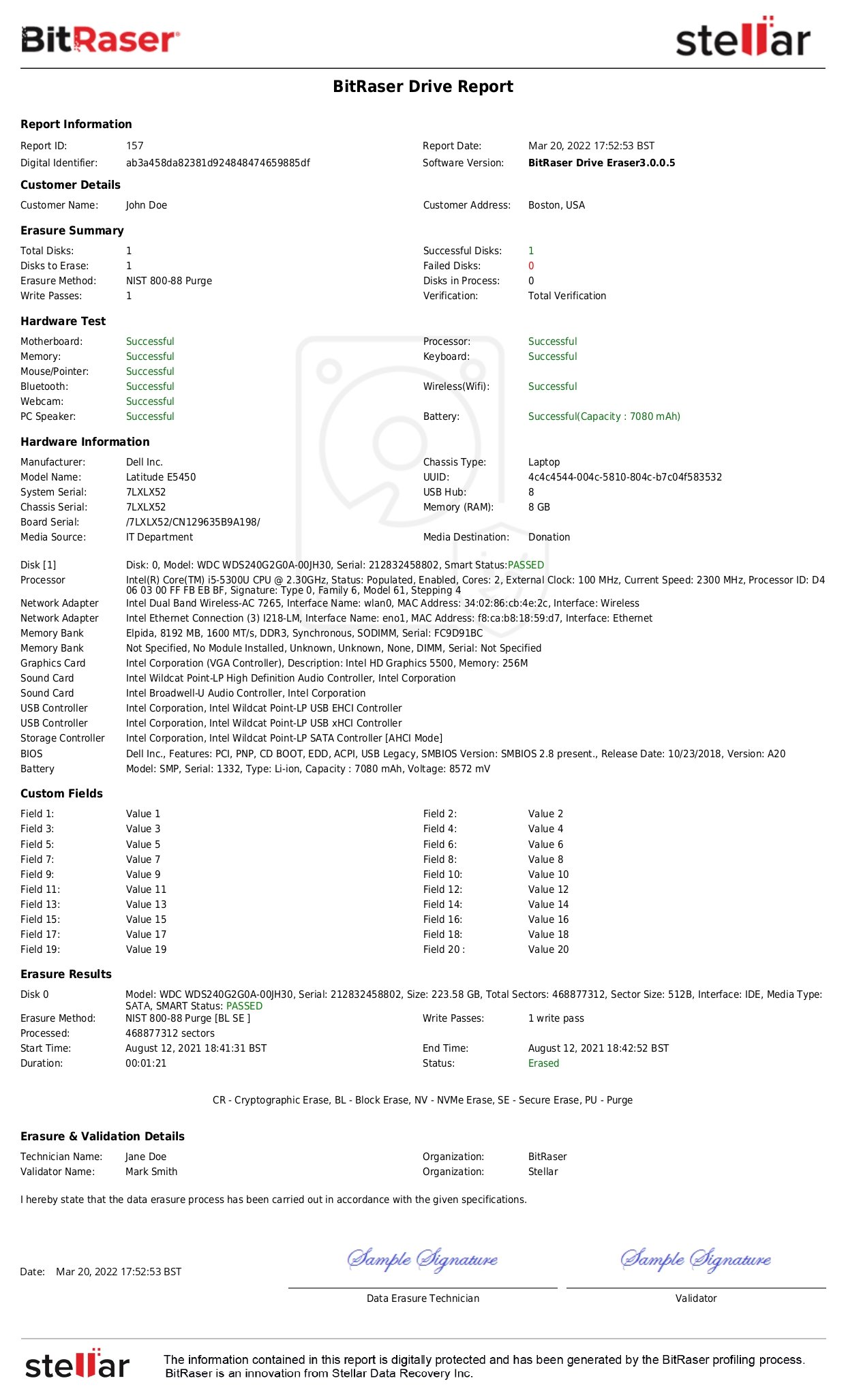
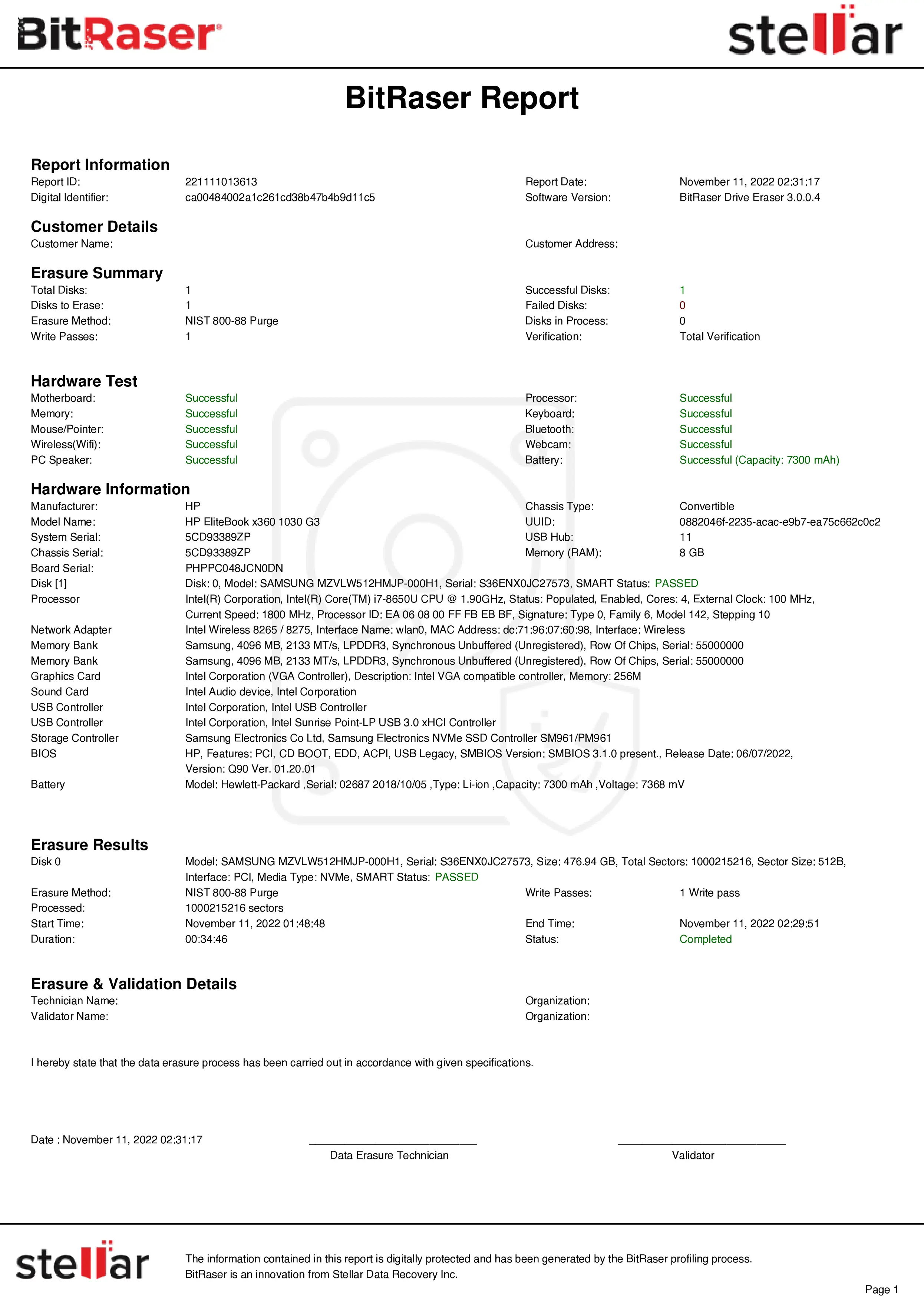
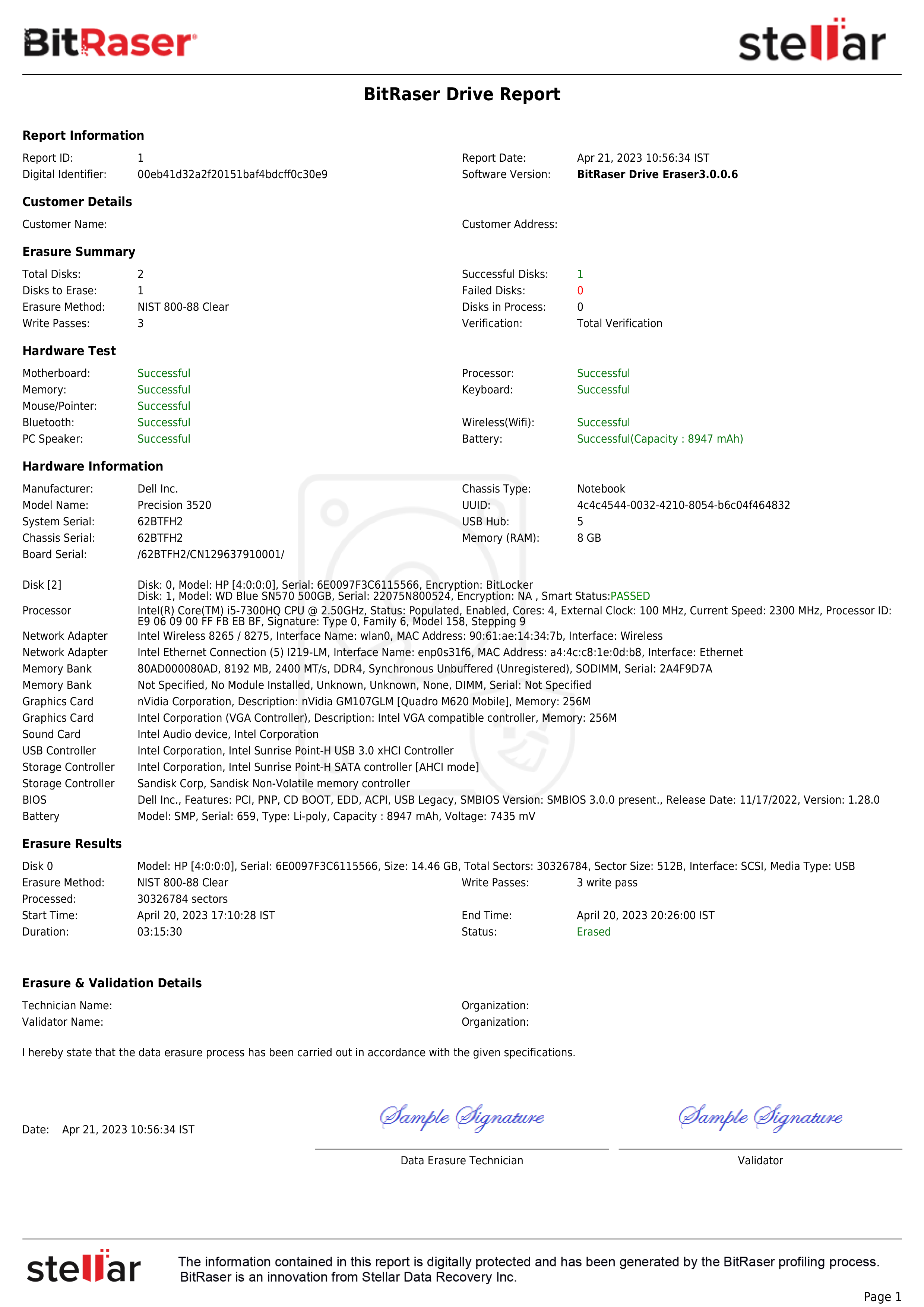
BitRaser Drive Eraser & Diagnostics software can securely erase Microsoft Surface devices beyond the scope of recovery while also generating tamper-proof erasure reports and certificates.
Stage 1: Download BitRaser ISO and Create Bootable USB
Step 1: Log in to ‘BitRaser Cloud Console’ & download ‘BitRaser Drive Eraser & Diagnostics ISO’ from the ‘Download BitRaser’ section (See Image 1).

Image 1: Download BitRaser Drive Eraser & Diagnostics ISO
Step 2: Use Rufus to create a bootable BitRaser USB drive by following the steps outlined in the KB article "How to Create a Bootable USB Using Rufus?"
Stage 2: Change Boot Configuration & Disable Secure Boot
Step 1: Press and hold the ‘Volume Up + Power’ buttons simultaneously until you see the Microsoft Surface logo on screen. Once the Surface UEFI interface opens, navigate to ‘Boot Configuration’ and move “USB Storage” to the top of the boot order.
Next, navigate to ‘Advanced Options’ and ensure that booting from USB devices is enabled (See Image 2).

Image 2: Enable USB Boot on Microsoft Surface
Step 2: To allow the Microsoft Surface device to boot from the BitRaser USB, ‘Secure Boot’ must be disabled. Go to the ‘Security’ tab and click on ‘Change configuration’ under Secure Boot. Then choose ‘None’ under Secure Boot certificate keyset, and then click ‘OK’ (See Images 3a & 3b).

Image 3a: Security Tab Microsoft Surface UEFI

Image 3b: Disable Secure Boot on the Microsoft Surface
Click on ‘Exit’, and restart the device. The Microsoft Surface device will now boot using the BitRaser Drive Eraser & Diagnostics USB.
Stage 3: Erase Microsoft Surface Device
The Microsoft Surface device will boot into BitRaser Drive Eraser & Diagnostics and display its internal storage drive (See Image 4).

Image 4: BitRaser Drive Eraser & Diagnostics Interface
Step 1: Connect the application to the internet to fetch licenses and upload reports. Click the ‘Settings’ icon, open the ‘Network’ tab, and configure a connection using Ethernet or Wi-Fi (See Image 5).

Image 5: Connect Application to Network
Step 2: Next, open the ‘Server’ tab and enter BitRaser Cloud credentials to connect the application to the BitRaser server (See Image 6).

Image 6: Connect Application to BitRaser Server
Step 3: All detected drives are selected for erasure by default. Select the desired erasure method and verification option, then click ‘Erase’ to begin the erasure process, and confirm the same by clicking ‘Proceed’ (See Images 7a & 7b).
Note: For SSDs and NVMe drives, it is recommended to use the ‘NIST Purge’ or ‘IEEE Purge’ method.

Image 7a: Click Erase to Begin Erasure Process

Image 7b: Confirm Erasure
You can monitor the erasure progress directly on the screen (See Image 8).

Image 8: Erasure Progress Screen
Once the erasure process is complete, a confirmation screen with a green tick appears (See Image 9).

Image 9: Erasure Completion Screensaver
Detailed erasure reports and certificates can be viewed and downloaded from the BitRaser Cloud Console.
Perform Hardware Diagnostics - Optional
BitRaser Drive Eraser & Diagnostics also includes a ‘Component Test’ tab for performing hardware diagnostics. Organizations that wish to perform data erasure and hardware diagnostics in a single workflow can customize the BitRaser ISO through the BitRaser Cloud Console or select the preferred workflow from the Settings menu (See Image 10).

Image 10: Change Default Process via Settings
Note: Hardware Diagnostic licenses must be purchased separately.
This allows ITADs and enterprise IT teams to evaluate the health and functionality of Microsoft Surface devices before redeployment or resale. The software supports multiple automated and manual tests for hardware components and also allows device grading after diagnostics.
To begin diagnostics, open the ‘Component Test’ tab and click ‘Start’ (See Image 11).

Image 11: Diagnostics Interface BitRaser Drive Eraser & Diagnostics
Follow the on-screen instructions to complete the diagnostic process (See Images 12 & 13). Once completed, the software generates and uploads a detailed diagnostic report to the BitRaser Cloud Console.

Image 12: Keyboard Test

Image 13: Microphone Test